How Much Range Is Lost in Sport Mode vs. Eco Mode on Highway Trips?
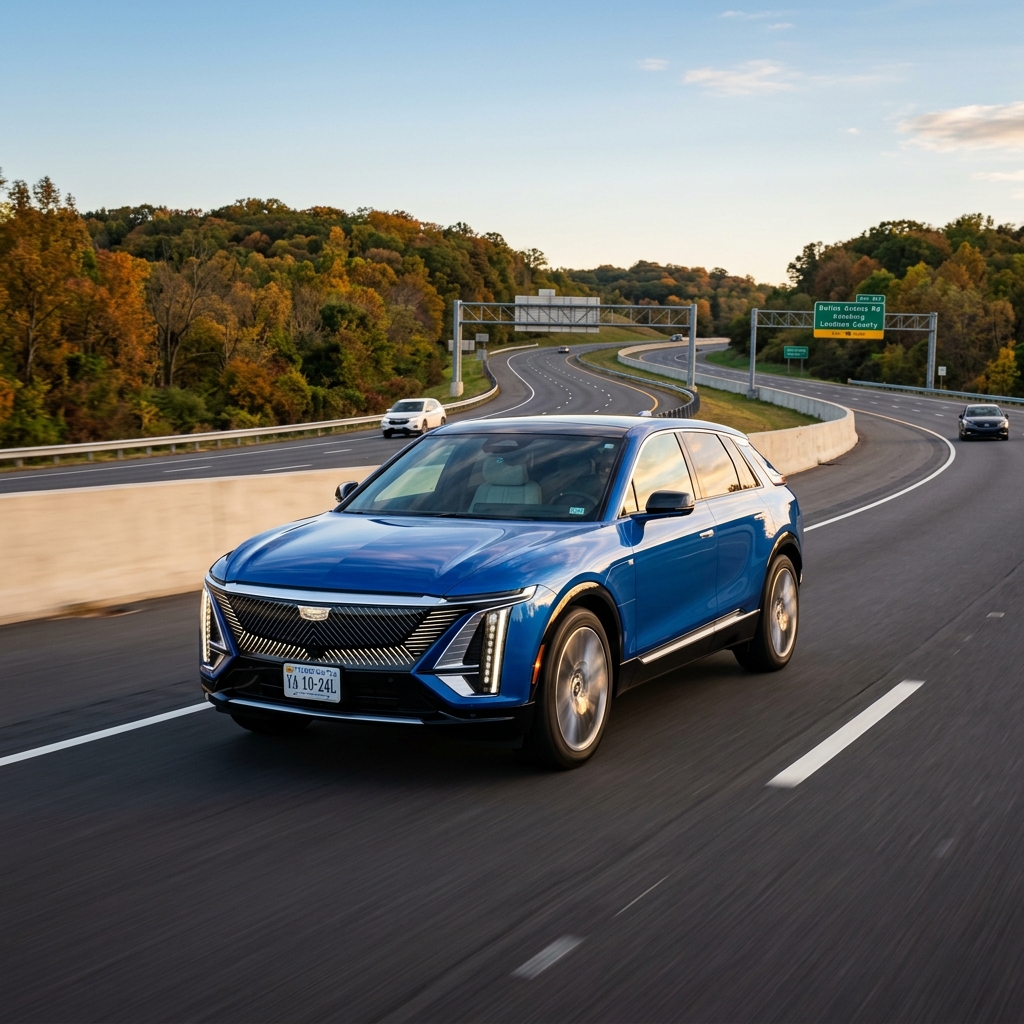
When setting out on a long sustained highway drive—whether commuting along Interstate 66, navigating Route 28 through Loudoun and Fairfax counties, or heading down I-95 for a weekend getaway—selecting the right drive mode plays a decisive role in your vehicle’s ultimate range. For modern electric vehicles (EVs) like the Cadillac LYRIQ and high-efficiency internal combustion or hybrid powertrains, switching from Eco mode to Sport mode typically yields a 10% to 20% reduction in total driving range. On a vehicle rated for 300 miles of electric range or fuel distance, this translates directly to a loss of 25 to 50 miles per full charge or tank.
This efficiency delta isn’t merely a matter of how fast you drive; it stems from fundamental changes in vehicle control systems. When Sport mode is engaged, the vehicle’s electronic control units (ECUs) reconfigure throttle mapping, aggressive dual-motor power delivery profiles, active battery pre-cooling, adaptive suspension stiffness, and climate control thresholds. In Eco mode, pedal responses are electronically smoothed, HVAC draws are capped, and coasting dynamics are prioritized. While cruising at steady speeds on the Dulles Greenway or I-66 express lanes, micro-adjustments in foot pressure that go unnoticed in Eco mode convert into instant power draws in Sport mode, rapidly diminishing battery kilowatt-hours or fuel gallons.
At Moore Cadillac Chantilly, located at 25450 Pleasant Valley Rd in Chantilly, VA, our vehicle specialists frequently counsel luxury drivers on optimizing their daily range across Northern Virginia. Drivers commuting between Ashburn, South Riding, and Washington, D.C. can dramatically extend their vehicle’s range by understanding when to leverage Sport mode’s invigorating throttle response and when to allow Eco mode’s steady-state efficiency algorithms to take over. Feel free to
Browse New Inventory to explore Cadillac’s latest EV and luxury offerings.
Why Drive Modes Impact Highway Range and Efficiency Differently
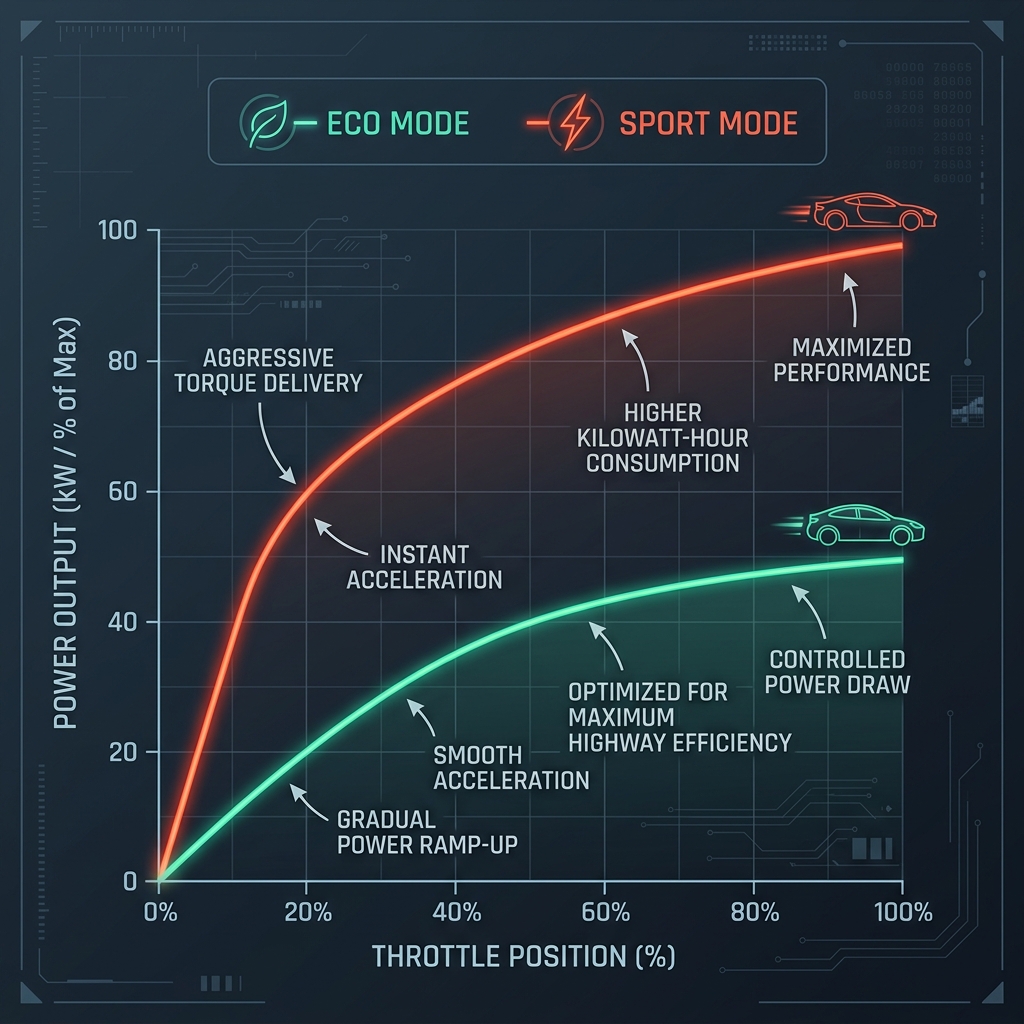
Modern luxury vehicles utilize drive modes not as superficial label changes, but as comprehensive recalibrations of mechanical, hydraulic, and electrical architecture. In Eco Mode (or Tour Mode in select Cadillac models), software algorithms focus exclusively on energy conservation. The throttle calibration curve is flattened, meaning a 20% depression of the accelerator pedal corresponds to only 10% or 15% power demand. In electric vehicles, front and rear drive units utilize intelligent disconnect systems to run in single-motor rear-wheel-drive configuration during highway cruising, eliminating parasitic drag from the secondary motor.
Furthermore, Eco mode restricts cabin climate control compressor speed and heating element wattage, operating the thermal system in an eco-conscious loop. Shift patterns in gas vehicles gear up early and resist downshifts, maintaining low engine RPMs even when climbing gentle highway grades near Route 50.
Conversely, Sport Mode prioritizes instant responsiveness, cornering stability, and driver feedback over maximum efficiency. In dual-motor EVs like the Cadillac LYRIQ AWD, Sport mode keeps both electric motors continuously engaged and energized, eliminating motor spool-up latency but constantly drawing baseline current. Throttle mapping becomes hyper-aggressive—a light tap delivers instant torque spikes.
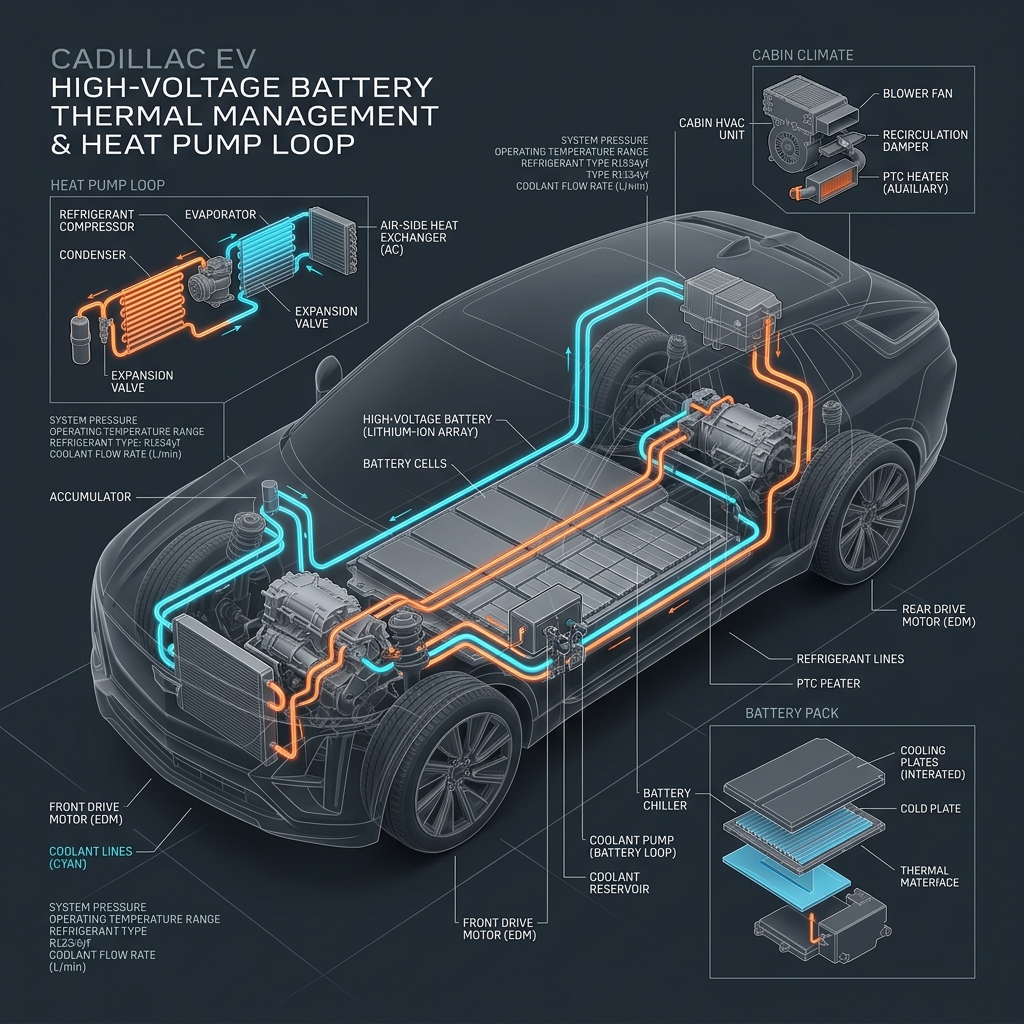
In addition, Sport mode activates active battery thermal conditioning to prepare cell chemistry for rapid high-kW energy discharge, running liquid cooling pumps and chillers at higher speeds. For internal combustion powertrains, Sport mode holds transmission gears much longer, keeping engine speed in the high torque band where fuel consumption per mile is significantly higher.
Highway Speed and Aerodynamics: Why Eco Mode Benefits Peak at 65+ MPH
Aerodynamic drag increases exponentially with vehicle speed—proportional to the square of the velocity ($F_d \propto v^2$). At speeds above 60 MPH, air resistance becomes the single dominant force resisting vehicle motion, accounting for over 60% of total energy expenditure. When cruising along high-speed corridors like the Dulles Greenway between Ashburn and Chantilly or I-66 toward Washington D.C., steady speed maintenance is the primary factor determining whether you achieve estimated range.
Eco mode provides its greatest highway benefit by dampening ‘micro-accelerations.’ When human drivers attempt to maintain 70 MPH manually in Sport mode, tiny foot movements cause the vehicle to momentarily surge to 72 or 73 MPH before backing off. Because aerodynamic drag is so severe at 70+ MPH, these repeated MINI-surge events consume disproportionately large amounts of energy.
Eco mode smooths these subtle pedal inputs into a continuous, linear output curve, preventing unnecessary power spikes against high wind resistance. Furthermore, in vehicles equipped with adaptive air suspension, Eco mode automatically lowers ride height by 0.5 to 1.0 inch at highway speeds to decrease frontal surface area and clean up underbody airflow.
By contrast, Sport mode may maintain a lower ride height for cornering stiffness or adjust active grille shutters to stay open for additional powertrain cooling. Open grille shutters disrupt laminar airflow over the vehicle’s front clip, increasing the drag coefficient ($C_d$) and compounding energy consumption during sustained 70 MPH cruising.
Do Performance Trims Reduce Driving Range on Long Commutes?
Wider Tires & Rolling Resistance
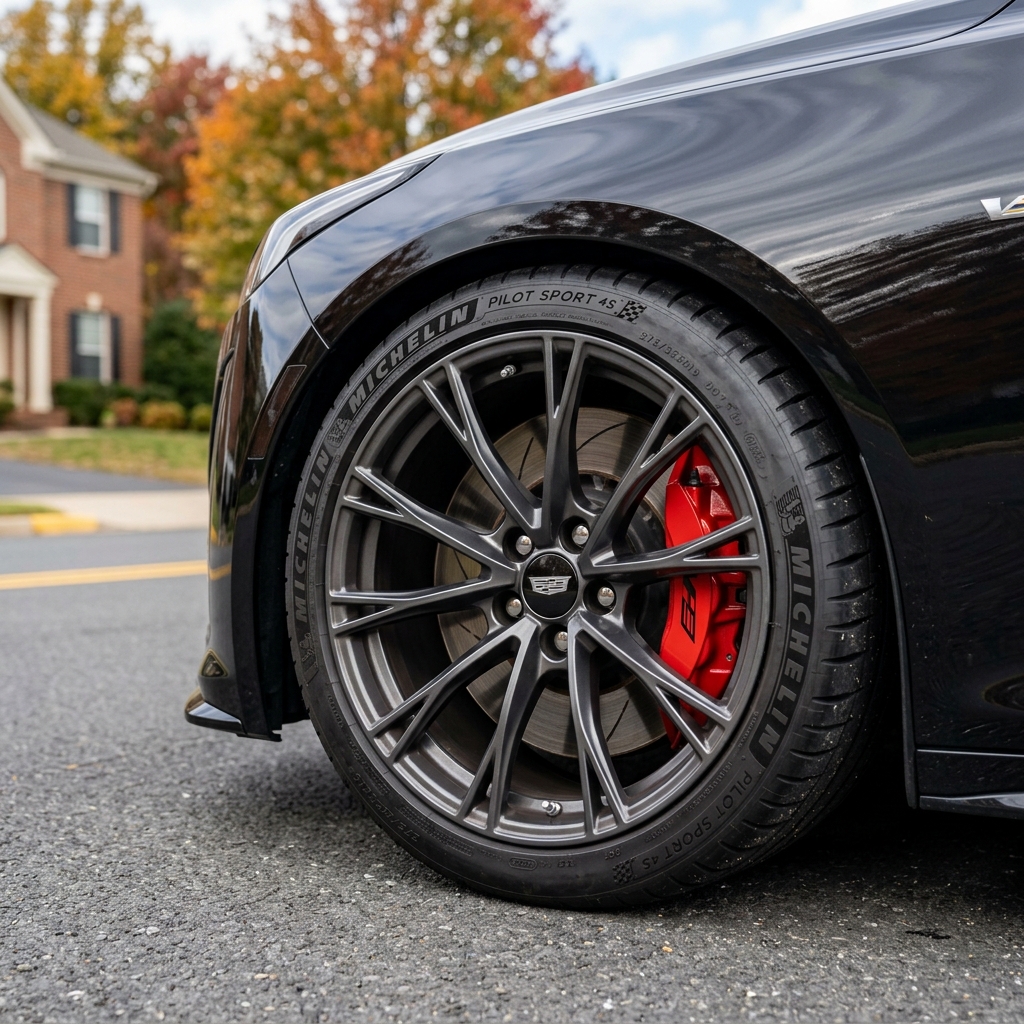
Performance trims such as Cadillac V-Series models feature wider staggered tire fitments with sticky, soft-compound rubber engineered for lateral grip. These performance tires exhibit significantly higher rolling resistance coefficients ($C_{rr}$) compared to eco-tuned low-rolling-resistance highway tires, reducing highway range by 5% to 8% even when driven conservatively.
AWD Motor Disconnect & Gearing
Dual-motor AWD and high-output performance powertrains utilize shorter final-drive ratios or twin permanent-magnet electric motors that cannot completely freewheel. Even in cruise mode, moving rotor magnets induce electromagnetic drag. In ICE performance models, shorter gear ratios keep engine RPM higher at highway cruise speeds.
Thermal & Cooling Overhead
High-performance trims incorporate larger auxiliary heat exchangers, high-capacity water pumps, and active differential coolers. These heavy-duty thermal systems draw constant electrical auxiliary power from the 12V/48V bus, adding consistent parasite energy loads during long Northern Virginia commutes.
Real-World Highway Range Comparison: Sport Mode vs. Eco Mode Data
To illustrate the empirical impact of drive modes on long-distance highway travel, the table below contrasts energy consumption metrics across standard 100-mile test routes at sustained speeds of 68 MPH. Data accounts for ambient summer conditions (75°F) versus winter climate conditions (35°F) typical of Northern Virginia winters.
| Vehicle Powertrain Type |
Drive Mode Selected |
Summer Highway Efficiency |
Winter Highway Efficiency |
Est. Total Range (100% Battery/Tank) |
Range Variance vs Eco |
| Luxury Dual-Motor EV (102 kWh) |
Eco / Tour Mode |
31 kWh / 100 mi |
36 kWh / 100 mi |
308 miles |
Baseline (0%) |
| Luxury Dual-Motor EV (102 kWh) |
Sport Mode |
36 kWh / 100 mi |
42 kWh / 100 mi |
262 miles |
-14.9% (-46 miles) |
| Luxury Single-Motor RWD EV (102 kWh) |
Eco / Tour Mode |
29 kWh / 100 mi |
34 kWh / 100 mi |
326 miles |
Baseline (0%) |
| Luxury Single-Motor RWD EV (102 kWh) |
Sport Mode |
33 kWh / 100 mi |
39 kWh / 100 mi |
285 miles |
-12.5% (-41 miles) |
| 3.0L Turbo Gas Powertrain |
Eco / Tour Mode |
28.5 MPG |
26.0 MPG |
484 miles |
Baseline (0%) |
| 3.0L Turbo Gas Powertrain |
Sport Mode |
24.2 MPG |
22.1 MPG |
411 miles |
-15.1% (-73 miles) |
As demonstrated in the empirical data, choosing Sport mode during long highway legs imposes an immediate 40- to 70-mile range penalty. If you are planning to trade in your current vehicle or upgrade to a high-efficiency luxury vehicle, you can easily
Sell Us Your Car at Moore Cadillac Chantilly and step into the newest technology.
The Throttle Mapping Dilemma: Acceleration Sensitivity vs. Highway Cruising
The primary cause of efficiency loss in Sport mode on highway trips isn’t top speed—it is throttle mapping sensitivity. In Eco mode, accelerator pedal calibration uses a gradual non-linear response curve. The first 50% of physical pedal movement corresponds to only 25% to 30% of total motor power output. This dampening effect allows drivers to maintain steady speed over undulating highway topography without sending excess power spikes to the drive wheels.
In Sport mode, this response curve is inverted. The first 25% of pedal travel commands up to 60% of total system torque. While this creates an exciting, immediate surge during spirited driving, it introduces severe inefficiencies during routine highway commuting along I-66 or Route 28.
When trailing traffic flow, minor adjustments in your foot position in Sport mode trigger sudden 50-to-100-kW electrical power draws. Even if your speed only increases by 1 or 2 MPH before you ease off, that momentary burst of torque expends precious battery kilowatt-hours that cannot be recovered through coasting.
Regenerative Braking and Coasting Strategies on Northern Virginia Highways
A common misconception among EV drivers is that strong regenerative braking in Sport mode improves highway efficiency. While aggressive One-Pedal Driving or heavy regen is ideal for stop-and-go city streets in Arlington or Tysons, it is actually counterproductive during sustained highway cruising between South Riding and Washington, D.C.
Basic physics dictates that kinetic energy conversion is subject to thermodynamic losses. Regenerative braking is only about 80% to 85% efficient at converting kinetic motion back into chemical battery storage, and re-accelerating that energy back up to speed incurs another 15% round-trip conversion loss. Therefore, preserving momentum via low-drag coasting in Eco mode is always more energy-efficient than slowing down via regen and accelerating back up.
In Eco mode, lifting off the accelerator pedal allows the vehicle to coast with minimal magnetic drag, maintaining momentum over long highway distances. In Sport mode, lifting off the pedal often initiates aggressive regenerative braking, instantly scrubbing off momentum and forcing you to re-engage the accelerator pedal moments later.
For optimal efficiency on open stretches like the Dulles Toll Road or Route 50, drivers should utilize custom powertrain profiles that pair Sport steering and suspension with Eco coasting dynamics. To inspect or service your vehicle’s drive control systems,
Schedule Your Service Appointment with our certified technician team.
Climate Control and Thermal Management Draw in Sport Mode
Active Battery Pre-Cooling
When Sport mode is selected, high-performance battery software assumes the driver will demand maximum current discharge. To prevent thermal throttling, the high-voltage chiller compressor activates to lower internal battery cell temperatures down to an optimal 20°C (68°F), consuming up to 3 kW of continuous electrical energy.
Unrestricted Cabin HVAC
Eco climate mode limits heat pump power and compressor cycling to conserve up to 50% of HVAC energy consumption. In Sport mode, cabin climate systems run completely unrestricted at max power, drawing up to 5–7 kW during hot Northern Virginia summers or freezing winter mornings.
Powertrain Thermal Loops
Electric motors and power electronics inverters generate significant heat during rapid switching cycles. Sport mode engages secondary coolant loops and high-flow water pumps full-time, adding continuous parasitic electrical loads even when holding steady speed on interstate highways.
Practical Tips to Maximize Highway Range Without Sacrificing Sporty Performance
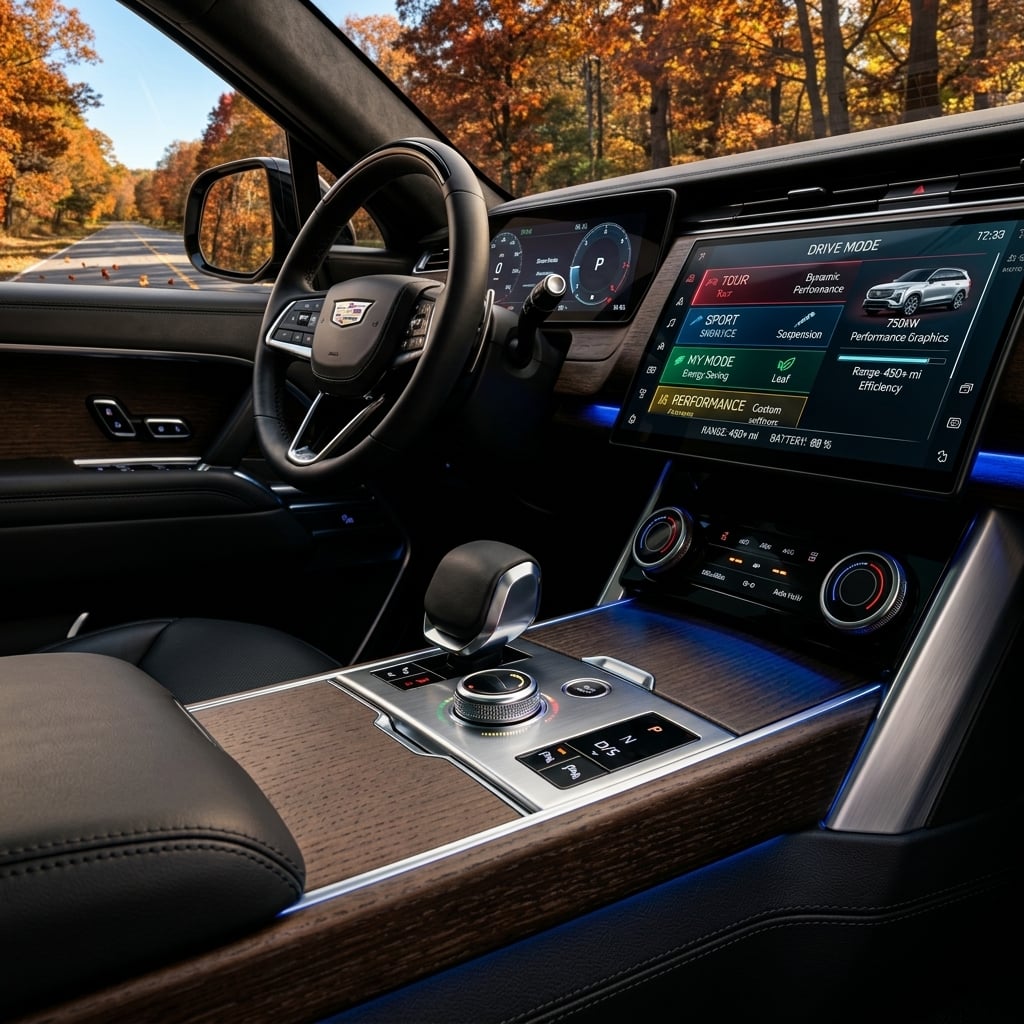
You don’t have to surrender steering precision, brake feel, or chassis control just to achieve maximum distance on your long-distance road trips. Modern luxury vehicles like the Cadillac LYRIQ allow drivers to create custom drive modes (such as Cadillac My Mode or V-Mode). By programming your personal profile, you can combine the precise weight of Sport steering and firm magnetic ride control with Eco powertrain response.
1. Configure Custom ‘My Mode’: Set Powertrain response to Tour/Eco while keeping Steering, Suspension, and Brake Response in Sport. This gives you firm, communicative chassis dynamics without sacrificing battery efficiency during highway cruising.
2. Leverage Adaptive Cruise Control & Super Cruise: Driving manually in Sport mode invites micro-accelerations. Utilizing Adaptive Cruise Control or Cadillac Super Cruise hands-free driving technology on approved highways enforces smooth, algorithm-optimized speed maintenance.
3. Maintain Recommended Tire Pressures: Cold winter air in Northern Virginia can reduce tire pressures by 3 to 5 PSI. Properly inflated tires reduce rolling resistance and offset efficiency losses. If you require specialized maintenance or parts,
Contact Our Parts Department for OEM Cadillac tire and wheel guidance.
4. Pre-Condition Cabin While Plugged In: Set your departure time via the vehicle mobile app while attached to a Level 2 charger at home. This warms or cools the battery and cabin using grid power before you set out on I-66.
5. Use Sport Mode Selectively: Reserve full Sport mode for highway merging ramps, passing tractor-trailers, or enjoying winding back roads in Loudoun County, switching back to Tour or Eco once cruising speed is established.
Local Driving Dynamics: Navigating Route 28 and I-66 Commutes Efficiently
Driving conditions in Northern Virginia present a unique blend of high-speed open interstates and rapid stop-and-go congestion. Commuters travelling along Route 28 past Washington Dulles International Airport, through Chantilly, and onto I-66 experience variable speed limits and fluctuating traffic flow throughout the workday. Understanding how to adapt drive modes to these local routes makes a noticeable difference in weekly charging intervals or fuel fill-ups.
During rush-hour slowdowns on I-66 where speeds drop below 35 MPH, switching to Eco mode with One-Pedal Driving active maximizes energy capture during repeated braking events. Once traffic clears near Centreville or Gainsville and speeds increase to 65+ MPH, maintaining Eco mode or Custom ‘My Mode’ ensures minimal aerodynamic energy expenditure against head winds.
Evaluating Vehicle Efficiency and Performance at Moore Cadillac Chantilly
At Moore Cadillac Chantilly, we believe luxury vehicle ownership should deliver both exhilaration and uncompromised real-world practicality. Our showroom features Cadillac’s complete line of high-performance and high-efficiency vehicles, including the all-electric Cadillac LYRIQ, OPTIQ, ESCALADE IQ, and high-performance V-Series editions.
Whether you are comparing new EV platforms or searching our
Used Inventory for top-tier pre-owned luxury vehicles, our experienced sales consultants can walk you through drive mode configurations, real-world battery range expectations, and charging solutions tailored to your Northern Virginia routine.
Visit our dealership in Chantilly to test drive your next luxury vehicle across various drive modes on local routes like Pleasant Valley Road and Route 28. Our team will demonstrate how to customize ‘My Mode’ settings to deliver the exact balance of dynamic performance and maximum driving range you desire.
Need immediate assistance or wish to speak with our sales or service specialists?
Call us at (703) 939-9351 today to discuss vehicle specs, inventory availability, or setup options.
Experience Peak Performance and Efficiency at Moore Cadillac Chantilly
Ready to experience how Cadillac’s cutting-edge powertrain technology balances exhilarating Sport mode performance with long-distance Eco range? Drivers from Ashburn, South Riding, Centreville, and across Northern Virginia are invited to visit Moore Cadillac Chantilly today. Explore our latest luxury inventory, test drive our electric and performance models, or consult with our factory-trained service technicians.


0 comment(s) so far on How Much Range Is Lost in Sport Mode vs. Eco Mode on Highway Trips?